What Is a Stellium? Graha Yuti Explained
When 3+ planets converge in one sign, they create powerful concentration. Discover what your stellium means.
Do I Have a Stellium?Quick Answer: What is a Stellium?
A stellium is a concentration of 3 or more planets in the same zodiac sign or house in your birth chart.
Vedic Term: Graha Yuti (planetary conjunction)
Effect: Intensifies that area of life, creating both exceptional gifts and concentrated challenges.
What You'll Learn:
What Is a Stellium in Astrology?
A stellium in astrology occurs when three or more planets occupy the same zodiac sign or house in a birth chart. In Vedic astrology, this concentration is called Graha Yuti (planetary conjunction), derived from Sanskrit where "Graha" means planet and "Yuti" means union.
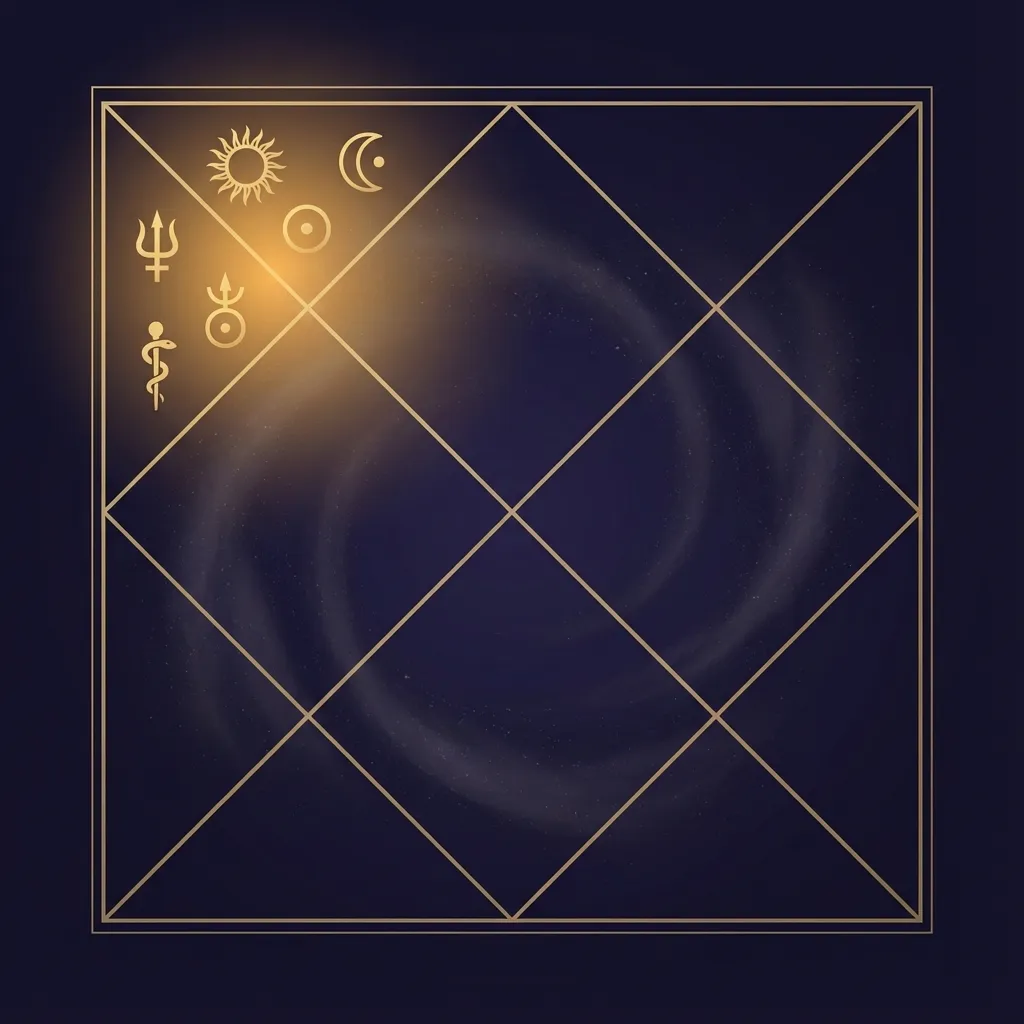
This planetary clustering creates intense focus in one area of life. While Western astrology treats stelliums as powerful but neutral, Vedic astrology examines additional factors:
What Vedic Astrology Considers in a Stellium:
- Planetary dignity: Are planets exalted, debilitated, or in own sign?
- House lordships: Which houses do the stellium planets rule?
- Graha Yuddha: Are any planets within 1 degree (planetary war)?
- Combustion: Are planets too close to the Sun?
- Aspects received: What planets aspect the stellium?
Western vs Vedic Stellium: Key Differences
While both systems recognize stelliums, they define and interpret them differently. Understanding this distinction is crucial if you've only studied Western astrology.
| Aspect | Western Astrology | Vedic Astrology |
|---|---|---|
| Term | Stellium | Graha Yuti |
| Minimum Planets | 3-4 (varies) | 3+ |
| Conjunction Basis | Degree-based (8-10 degree orb) | Sign-based (same rashi) |
| Zodiac System | Tropical (season-based) | Sidereal (star-based) |
| Classical Source | Modern development (20th century) | BPHS Chapter 34 (ancient) |
Critical Difference: Your Stellium May Change
Due to the ~24 degree difference between tropical and sidereal zodiacs, your stellium might be in a different sign in Vedic astrology. A Western Capricorn stellium often becomes Sagittarius in Vedic calculations.
Graha Yuddha: Planetary War Within a Stellium
Graha Yuddha (planetary war) is a unique Vedic concept that occurs when two planets are within 1 degree of each other. This creates tension and competition between the planetary energies, modifying how the stellium manifests.

Rules of Graha Yuddha (Planetary War):
- Proximity: Planets must be within 1 degree of each other
- Winner: The planet with lower longitude typically wins
- Sun excluded: Sun doesn't participate in Graha Yuddha (causes combustion instead)
- Effect: Loser's significations suffer; winner's strengthen
Not all stelliums contain Graha Yuddha. It only occurs when specific planets cluster extremely tightly. When present, it adds complexity to interpretation that Western astrology misses entirely.
Pravrajya Yoga: The 4-Planet Stellium
When four or more planets conjoin in a single house, classical texts examine the conditions for Pravrajya Yoga, traditionally indicating renunciation or intense spiritual focus.
Modern Interpretation of Pravrajya Yoga:
While classical texts associated this yoga with monastic life, modern Vedic astrologers interpret it as:
- Extreme life focus: Singular devotion to one path
- Non-attachment: Less concern with material accumulation
- Purpose-driven: Strong sense of mission or calling
- Unconventional path: Life that doesn't follow traditional patterns
Note: The specific planets involved and their dignity significantly modify these effects.
Do You Have a Stellium?
Enter your birth details to instantly discover if you have a stellium and what it means.
Check My ChartStellium Meanings by House
The house containing your stellium determines which life area receives concentrated planetary energy. Below are interpretations for each of the 12 houses.
1st House (Lagna/Ascendant)
Intense focus on self-expression, physical body, and personal identity. Strong personality that dominates all interactions. The native becomes a focal point wherever they go.
2nd House (Dhana Bhava)
Concentrated energy around finances, speech, and family values. Multiple income sources possible. Strong attachment to possessions and accumulated wealth.
3rd House (Sahaja Bhava)
Powerful communicator with intense sibling dynamics. Success through writing, media, or short travels. Exceptional courage and initiative.
4th House (Sukha Bhava)
Deep connection to home, mother, and emotional security. May own multiple properties. Strong attachment to roots and homeland.
5th House (Putra Bhava)
Exceptional creative talents and intellectual abilities. Strong focus on children, education, or speculative ventures. Natural performer or teacher.
6th House (Ripu Bhava)
Life dedicated to service, health, or overcoming obstacles. May work in healthcare, law, or competitive fields. Ability to defeat enemies and rivals.
7th House (Kalatra Bhava)
Life revolves around relationships and partnerships. Multiple significant relationships or business partnerships. Public-facing career likely.
8th House (Randhra Bhava)
Deep interest in mysteries, occult, and transformation. Potential for inheritance or partner's resources. Intense psychological depth.
9th House (Dharma Bhava)
Strong spiritual inclinations and philosophical mind. Benefits through father, teachers, or long-distance travel. Natural wisdom and luck.
10th House (Karma Bhava)
Extremely career-focused with public recognition. Multiple professions or leadership roles. Strong ambition and desire for achievement.
11th House (Labha Bhava)
Success through networks, large organizations, and elder siblings. Multiple income streams. Fulfillment of desires and aspirations.
12th House (Vyaya Bhava)
Strong spiritual inclinations or foreign connections. May live abroad or work in institutions. Interest in meditation, hospitals, or charitable work.
Ready for Your Complete Stellium Analysis?
Our premium report includes detailed stellium interpretation, Graha Yuddha analysis, and personalized predictions.
Get Your Premium Birth Chart ReportFrequently Asked Questions
What is a stellium in astrology?
A stellium is a concentration of 3 or more planets in the same zodiac sign or house in your birth chart. In Vedic astrology, this is called Graha Yuti. This concentration creates intense focus in one life area, amplifying both opportunities and challenges related to that house's themes.
How many planets make a stellium?
Most astrologers agree that 3 or more planets constitute a stellium. Some Vedic traditions consider 4 planets as particularly significant, potentially forming Pravrajya Yoga. All classical planets count: Sun, Moon, Mercury, Venus, Mars, Jupiter, Saturn. Rahu and Ketu (lunar nodes) are sometimes included.
Is a stellium good or bad?
A stellium is neither inherently good nor bad it indicates intense focus rather than a value judgment. The effects depend on which planets are involved, their dignity (exalted, debilitated, own sign), the house placement, and aspects from other planets. Benefic planets (Jupiter, Venus, Moon) tend toward positive effects; malefic planets (Saturn, Mars, Rahu) create challenges that build strength.
What is Graha Yuddha (planetary war)?
Graha Yuddha occurs when two planets are within 1 degree of each other. According to Brihat Parashara Hora Shastra, the planet with lower longitude typically wins the war. The winning planet's significations strengthen while the loser's diminish. Sun doesn't participate in Graha Yuddha; its proximity causes combustion instead.
What's the difference between Western and Vedic stellium definition?
Western astrology uses degree-based conjunction (planets within 8-10 degrees). Vedic astrology considers any planets in the same rashi (sign) as conjunct, regardless of degree separation. Due to the ~24 degree difference between tropical and sidereal zodiacs, your stellium may be in a different sign in Vedic calculations.