Have you ever wondered why certain periods of your life feel charged with opportunity while others seem heavy with challenge? Ancient Vedic astrologers found the answer thousands of years ago, and they encoded it into one of the most precise timing systems ever devised.
Vimshottari dasha is the cornerstone of Vedic astrology's predictive framework, a 120-year planetary cycle that maps the unfolding of your life with remarkable accuracy. Unlike Western astrology, which often focuses on the positions of planets at a single moment, this system tracks how planetary energies activate and influence your life across specific time periods. Each planet governs a defined cycle, and understanding these cycles gives you a powerful lens for interpreting your past, present, and future.
In this tutorial, you will learn exactly how vimshottari dasha works, which planets rule each period, how to calculate your current dasha cycle, and how to interpret what each phase means for your life. No prior knowledge of Vedic astrology is required. By the end, you will have a clear, working understanding of this timeless system and how to apply it practically.
What Is Vimshottari Dasha? The Core Idea
Vedic astrology has always excelled at describing what your birth chart contains: which planets are strong, which houses are activated, what themes and talents you carry into this lifetime. But for centuries, practitioners faced a harder question: when do those potentials actually show up in real life? Vimshottari Dasha is the answer.
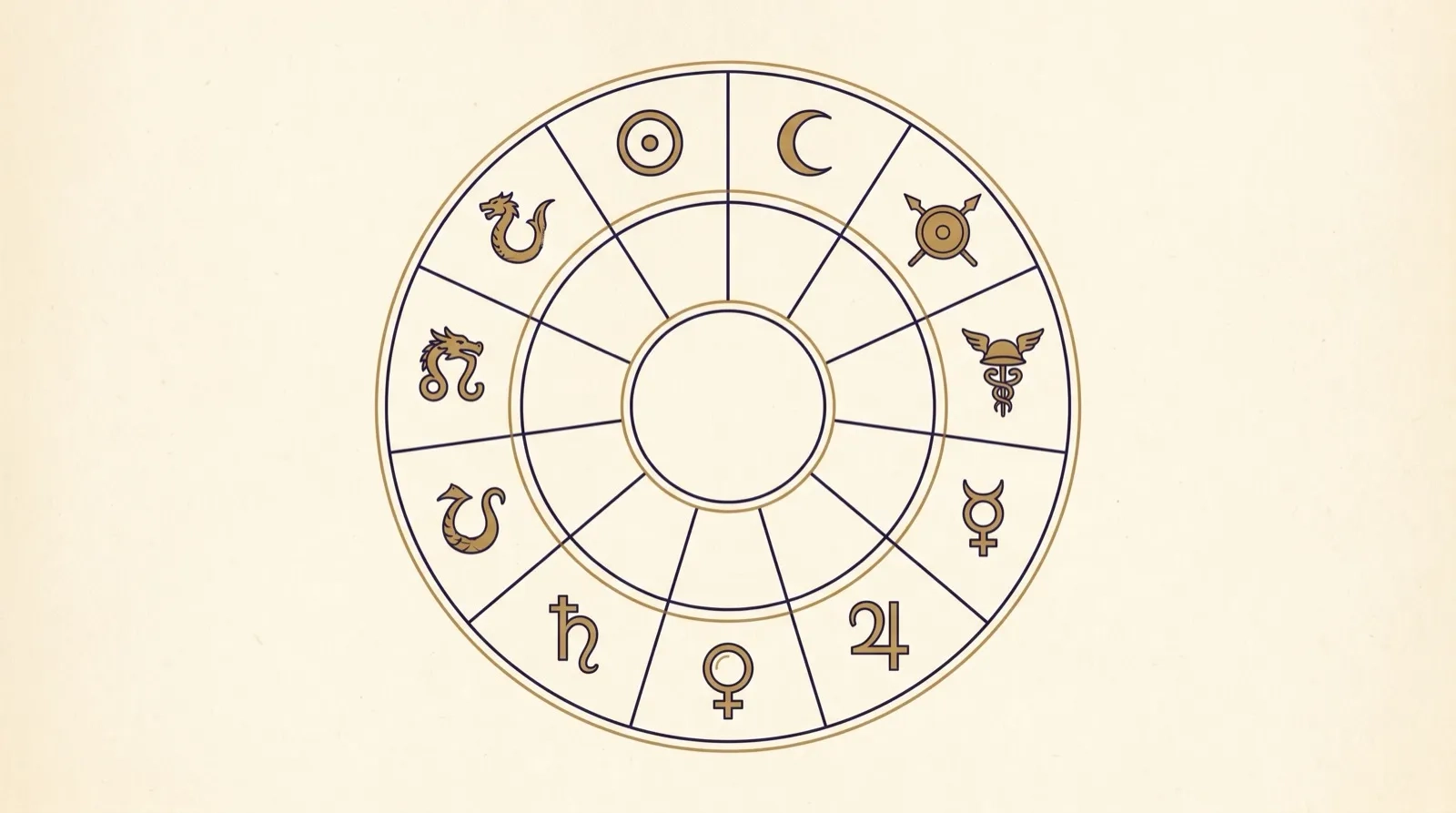
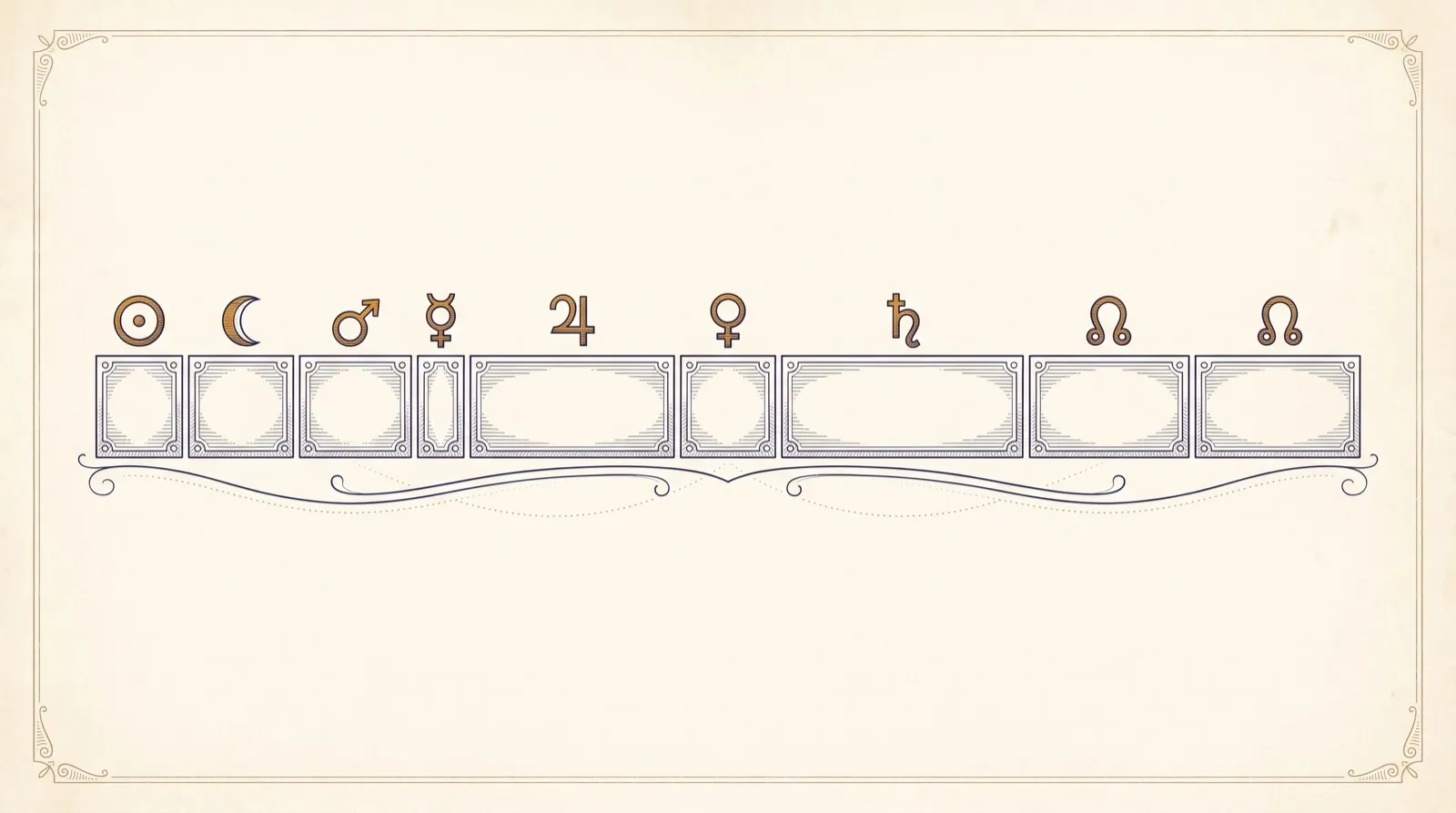
At its core, Vimshottari Dasha is a planetary period system that lays a precise timing grid over your birth chart. It divides your life into sequential chapters, each ruled by one of the nine planets (Sun, Moon, Mars, Mercury, Jupiter, Venus, Saturn, Rahu, and Ketu). Think of your birth chart as a map of terrain and your Vimshottari Dasha as the itinerary that tells you which region you are traveling through right now, and for how long.
The entire sequence is unlocked by a single piece of information: the Nakshatra (lunar mansion) occupied by the Moon at the exact moment of your birth. The 27 Nakshatras are distributed across the nine planets in a fixed, repeating order. Whichever planet rules your birth Nakshatra determines your starting period. From that point, the sequence follows a set order: Ketu, Venus, Sun, Moon, Mars, Rahu, Jupiter, Saturn, Mercury, then repeats. Because the Moon governs the mind and karmic imprints in Vedic thought, its Nakshatra position captures the precise starting point of your personal timeline. This is why an accurate birth time is essential; even a few minutes can shift your entire dasha calendar.
The system spans a theoretical 120-year lifespan, divided among the nine planets in fixed durations: Ketu (7 years), Venus (20), Sun (6), Moon (10), Mars (7), Rahu (18), Jupiter (16), Saturn (19), and Mercury (17). This is not a prediction of how long you will live. It is a complete map of possible life chapters, covering every planetary influence in one full cycle. You begin somewhere in the middle of that cycle at birth and move through it sequentially.
Among the 42 dasha systems described in Sage Parashara's classical text Brihat Parashara Hora Shastra, Vimshottari is ranked first and considered most suited to the current Kali Yuga era. Parashara notes that the 120-year framework aligns with the natural human lifespan of this age, making it universally applicable. You can explore detailed Vimshottari dasha predictions and reports to see this system applied to a real chart.
One final distinction matters for anyone familiar with Western astrology. Western timing relies heavily on transits: the current positions of planets in the sky measured against your natal chart. Vimshottari Dasha is fundamentally different because it is internally driven by your birth conditions, not by where planets happen to be today. Your dasha sequence was set the moment you were born. Transits in Vedic practice play a supporting role, acting as triggers within an already-active dasha period. The dasha sets the overarching theme of a multi-year chapter; transits help pinpoint specific moments within it. For understanding how Mahadasha periods shape major life events, this inside-out approach makes Vimshottari uniquely powerful for long-range life planning.
The 120-Year Cycle: Nine Planets, Fixed Sequence
The full 120-year Vimshottari cycle distributes itself across nine planets in a sequence that has remained unchanged for millennia. Here is every Mahadasha period in order, with its duration and the primary life theme it amplifies:
This sequence is not organized by planetary size, orbital speed, or any alphabetical logic. It follows the traditional grouping of the 27 nakshatras into nine sets of three, each set assigned to one of the nine grahas. Because the Vimshottari system is anchored to the Moon's nakshatra at birth, the order reflects lunar astronomy rather than solar or physical planetary attributes. Working through the cumulative sequence shows how the running totals add up across all nine periods. The fixed sequence means that once your starting dasha is known, every subsequent period and its approximate start date can be calculated with precision.
The contrast between the longest and shortest Mahadashas is worth pausing on. Venus commands a full 20 years, the widest window in the entire cycle. Venusian themes, such as building partnerships, deepening creative pursuits, and cultivating material stability, genuinely require extended time to develop and ripen. The Sun, by contrast, receives only 6 years; its energy is concentrated, intense, and directional. Sun periods often bring moments of visibility, leadership tests, or clarifying questions about identity and purpose, themes that don't need decades to resolve. This asymmetry mirrors the uneven rhythm of real life: some chapters unfold slowly and luxuriously, while others arrive as sharp, focused transitions. Classical Vimshottari commentaries explore these contrasts across all nine planets in considerable depth.
Because the cycle totals 120 years and most people live between 70 and 85 years, the practical reality is that you will move through only four to six complete or partial Mahadashas in your lifetime. Which ones you experience depends entirely on your birth nakshatra and the remaining balance of the first dasha at the moment you were born. A person born late in a Rahu Mahadasha, for example, begins life mid-chapter and moves into Jupiter earlier than someone born at the start of a Ketu period. To identify your most relevant periods, calculate your birth nakshatra using your sidereal Moon placement, determine the remaining dasha balance at birth, then add the full durations consecutively until you reach your current age. The dashas you are living through now, and the one or two ahead of you, deserve the closest attention.
This is where the most empowering reframe lives. Each Mahadasha is not a verdict; it is an invitation. Saturn's period is not a punishment; it is an extended apprenticeship in patience and structural thinking. Rahu's 18 years are not chaos; they are a sustained push toward ambition and experimentation. When you know which chapter you are currently in, you can align your decisions, relationships, and efforts with the energy that is already present, rather than working against it. Vimshottari Dasha gives you a map of the terrain ahead, and maps exist to help you navigate, not to frighten you into staying home.
How Your Dasha Is Calculated
Understanding exactly how your dasha timeline is built helps you trust the output and interpret it with confidence. The calculation begins with a single, precise astronomical measurement: the sidereal position of your natal Moon.
Finding Your Starting Mahadasha
The sidereal zodiac is divided into 27 nakshatras, each spanning exactly 13°20'. Every nakshatra is ruled by one of the nine Vimshottari planets, and the nakshatra your Moon occupies at the moment of birth determines which planet rules your first Mahadasha. If your Moon falls in Rohini at birth, for example, your sequence begins with a Moon Mahadasha. If it falls in Ashwini, you open with Ketu. The starting planet is not a choice or interpretation; it is a direct mathematical result of where the Moon sits in the sky the instant you arrive.
What makes this more nuanced is the balance calculation. You almost never begin a Mahadasha from its very start. Because the Moon lands somewhere within a nakshatra, not necessarily at its opening degree, the system measures how far through that nakshatra the Moon has already traveled. Each nakshatra spans 800 arc-minutes. If the Moon has covered 400 of those 800 arc-minutes, exactly halfway through, you begin life at the midpoint of that planet's full period. A Saturn Mahadasha, which runs 19 years in total, would therefore open with roughly 9.5 years remaining. Every subsequent Mahadasha then runs its complete duration in the fixed sequence.
Why Lahiri Ayanamsa Is Non-Negotiable
Calculating a sidereal Moon position requires subtracting the ayanamsa, the offset between the tropical and sidereal zodiacs, from the tropical longitude. The Lahiri ayanamsa, also called Chitrapaksha, is the official standard adopted by the Government of India and used as the default across traditional Vedic practice. It anchors the sidereal zodiac to the star Spica at 0° Libra sidereal and currently sits near 24.21° for 2026.
Using a different ayanamsa, even one that differs by only a degree or two, can push your Moon across a nakshatra boundary entirely. When that happens, the ruling planet changes, your starting Mahadasha changes, and the entire 120-year sequence shifts forward or backward. Every Antardasha date downstream moves with it. This is not a minor rounding issue; it restructures your timeline from birth onward. Consistency with the Lahiri standard is what makes one person's dasha calculation comparable with another's and ensures your results align with classical Vedic practice.
The Three-Tier Timing Structure
The Vimshottari system operates across three nested levels, each zooming in on a shorter window of time. The Mahadasha is the major chapter, lasting anywhere from 6 years (Sun) to 20 years (Venus), setting the broad thematic tone for that life period. Within each Mahadasha sits the Antardasha, sometimes called Bhukti, a sub-period lasting months that introduces a second planetary influence into the mix. Within each Antardasha sits the Pratyantar Dasha, a finer division running weeks long, which allows timing to sharpen considerably. Additional sub-divisions exist beyond that, but Mahadasha, Antardasha, and Pratyantar cover most practical analysis from major life chapters down to specific windows of activity.
Why Calculation Precision Matters
A one-degree error in the Moon's sidereal longitude can shift your dasha balance by weeks or even months, and that error cascades through every sub-period beneath it. This is why DashaClub's dasha calculator uses Swiss Ephemeris data, the same high-precision planetary engine used by professional astronomical software, capable of placing the Moon to within a fraction of an arcsecond. Older printed tables or lower-accuracy ephemeris methods introduce discrepancies that look small in degrees but translate into meaningfully shifted dates at the Antardasha and Pratyantar levels. Paired with accurate birth data and Lahiri ayanamsa, Swiss Ephemeris precision ensures that the timing you read is the timing the tradition actually intends.
How to Read a Dasha Period: Interpretation Basics
Knowing when a Mahadasha is active is only the starting point. The real skill lies in understanding what that period will actually feel like for you specifically, because the same planet can deliver radically different experiences depending on two foundational factors.
Factor One: The Planet's Inherent Nature
Every planet in Vedic astrology carries a natural disposition, either benefic or malefic, regardless of your chart. Jupiter, Venus, a waxing Moon, and a well-placed Mercury are natural benefics: they tend to support growth, harmony, and well-being. Saturn, Mars, the Sun, Rahu, and Ketu are natural malefics: they tend toward pressure, transformation, discipline, or disruption. During a Jupiter Mahadasha, the underlying current is expansive and generous. During a Saturn Mahadasha, the underlying current is structured, demanding, and often slow-burning. This natural quality sets the tone of the period, the emotional weather you live inside for years at a stretch.
Factor Two: Functional Role as a House Ruler
Here is where interpretation becomes genuinely personal. In your specific birth chart, every planet owns particular houses based on your rising sign (ascendant). That ownership, called house rulership or lordship, determines which departments of life the Mahadasha activates. A planet ruling your 9th house (fortune, higher learning, mentors, spirituality, long-distance travel) will direct its energy toward expansion of wisdom and opportunity. The same planet ruling your 12th house (losses, foreign lands, seclusion, spiritual retreat, hidden expenses) will channel its energy toward introspection, expenditure, or matters requiring release and surrender. Same planet, same natural temperament, but entirely different lived experience. According to classical Vedic frameworks, functional lordship is often considered the primary lens in dasha interpretation, because it tells you which chapters of life are being written during any given period.
Planetary Strength and Dignity
Once you know a planet's natural nature and functional role, the third layer is its strength and dignity in your chart. A planet placed in its sign of exaltation or its own sign operates with full confidence, delivering clearer and more positive results. Jupiter exalted in Cancer, for instance, brings amplified wisdom, generosity, and growth during its Mahadasha. A debilitated planet, by contrast, often produces delays, obstacles, or situations requiring extra effort before results materialize. Benefic aspects from Jupiter or Venus can soften a difficult Mahadasha; malefic aspects from Saturn or Mars can introduce friction even into otherwise favorable periods. You can explore how Vimshottari Dasha periods are interpreted systematically using these layered factors together.
Worked Example: Jupiter Mahadasha in Two Charts
Consider Jupiter's 16-year Mahadasha for two different people. For someone with Jupiter ruling the 9th house, this period tends to bring genuine good fortune: educational achievements, access to mentors, foreign opportunities, spiritual growth, and recognition. Life opens up. For someone with Jupiter ruling the 6th house (covering conflict, health, debts, and enemies), the same Jupiter Mahadasha shifts its emphasis toward health vigilance, workplace challenges, or legal matters. The positive side still exists, as Jupiter can bring victory over obstacles, but the path involves effort rather than effortless expansion. Same planet, same 16 years, two very different flavors of experience. The Wikipedia overview of dasha astrology) confirms that placement and lordship are inseparable from any accurate reading.
The Antardasha as Texture
Within every Mahadasha, the timeline subdivides into Antardashas (sub-periods), each ruled by a different planet in the Vimshottari sequence. Think of the Mahadasha as the dominant chapter and the Antardasha as the shifting scenes within it. A Saturn Antardasha inside a Jupiter Mahadasha may slow the pace, adding discipline or delays to what is otherwise a growth-oriented period. A Venus Antardasha within the same Jupiter Mahadasha may bring relational warmth or material comfort to the foreground. Critically, the Antardasha never overrides the Mahadasha; it textures and refines it. This layered structure is precisely what makes Vimshottari Dasha such a precise timing tool, as the classical Vedic texts describe. Understanding both levels together allows you to anticipate not just the broad theme of a multi-year chapter but also which months within it are likely to be more active, more restful, more challenging, or more rewarding.
Vimshottari in Real Life: What Each Mahadasha Brings
Each Mahadasha carries its own unmistakable atmosphere, a distinct flavor that colors the years it governs. Think of these periods less as fate handed down from above and more as chapters in a long biography, each one asking something specific of you and offering something specific in return. What follows is a practical portrait of what each period tends to emphasize in real life.
Ketu Mahadasha (7 Years): The Inward Turn
Ketu's seven-year period often surprises people because it operates so differently from the achievement-oriented chapters that may have preceded it. On the surface, life can feel unusually quiet, sometimes even stripped back. Ambitions that once felt urgent lose their pull. Relationships or roles that were built on external validation may quietly fall away. Beneath that stillness, however, something deeper is usually in motion. This is among the most spiritually fertile periods in the entire 120-year cycle, one that invites genuine inquiry into meaning, identity, and what you are willing to release. Those who work with Ketu's energy rather than against it frequently describe it, looking back, as the period that changed everything important, even if nothing dramatic appeared to happen from the outside.
Venus Mahadasha (20 Years): The Longest Chapter
At twenty years, Venus governs the single longest Mahadasha in the entire sequence, and for many people it is the most outwardly rewarding stretch of life they experience. Venus rules beauty, creativity, relationships, comfort, and material refinement; its period tends to bring these themes center stage. Marriages form, artistic pursuits flourish, financial circumstances often stabilize or improve, and there is frequently a heightened appreciation for the pleasures of living well. Because the period is so long, it typically contains multiple sub-chapters, some lighter and some more complex, especially if Venus carries challenging aspects in your chart. Even so, a well-placed Venus Mahadasha can feel like a sustained season of abundance that funds the soul's later, more demanding work.
Sun Mahadasha (6 Years): Coming Into Your Own
Sun's compact six-year window carries an outsized sense of consequence. This is a period organized around identity, authority, and visibility. Career paths often crystallize, leadership opportunities emerge, and questions about who you are in the world demand honest answers. The relationship with father figures, institutional power, and government bodies frequently becomes relevant during this time, whether through support or through friction that ultimately clarifies your own values and direction. Because the Sun rules the self at its most essential, this period can feel both exposing and energizing. People often describe Sun Mahadasha as the chapter in which they stopped deferring and started owning their choices.
The Remaining Six Mahadashas: Distinct Invitations
The other six periods each carry their own signature emphasis. Moon (10 years) deepens emotional intelligence, family bonds, and public-facing roles; it heightens sensitivity and often brings significant domestic changes. Mars (7 years) channels ambition, physical drive, and competitive energy; entrepreneurship, property matters, and decisive action are common themes, and physical vitality is high. Rahu (18 years) is the boundary-crosser, a period associated with rapid change, unconventional paths, foreign environments, and intense material striving; it can deliver remarkable worldly gains while also creating a persistent sense of restlessness. Jupiter (16 years) is the great expander, bringing opportunities in education, wisdom, wealth, and mentorship; it is widely considered one of the most broadly beneficial periods for long-term development. Saturn (19 years) is the teacher of endurance; discipline, responsibility, and karmic accountability define these nearly two decades, and while the pace can feel slow, the foundations built here tend to last. Mercury (17 years) activates intellect, communication, commerce, and learning; it rewards curiosity, analytical sharpness, and the ability to adapt quickly.
Tendencies, Not Verdicts
The single most important thing to carry forward from this overview is that every portrait above describes a tendency and an invitation, not a fixed verdict. Two people running the same Mahadasha simultaneously can have profoundly different experiences depending on where that planet sits in their individual charts, which houses it rules, and the choices each person makes within the window. The Vimshottari Dasha system gives you the timing; your chart gives you the context; and your own awareness and actions shape the outcome. Knowing which chapter you are in is genuinely useful, and knowing what that chapter is asking of you is even more so.
Why Vimshottari Over Other Dasha Systems?
Vedic astrology's foundational text, the Brihat Parashara Hora Shastra (BPHS), describes an impressive 42 dasha systems in total, ranging from nakshatra-based (stellar) systems to sign-based approaches rooted in Jaimini tradition. In practice, however, only a handful see regular use. Most of these systems are conditional, meaning they apply only when a specific chart configuration is present, such as a particular lagna placement, the Moon's paksha, or Rahu occupying a certain house. Because no single conditional system fits every chart, practitioners would need to switch frameworks constantly. Vimshottari sidesteps this problem entirely by applying to virtually every chart without restriction, which is precisely why it became the dominant system across centuries and traditions.
How Other Systems Compare
To appreciate Vimshottari's position, it helps to briefly understand its main alternatives. Chara Dasha, used in Jaimini astrology, is sign-based rather than nakshatra-based. Periods are assigned to zodiac signs and progress according to a sign's lord, making it excellent for mapping broad life themes, personal development arcs, and relationship patterns. Many experienced Jyotishis use Chara Dasha as a secondary lens alongside Vimshottari, but its sign-progression logic requires familiarity with Jaimini's distinct karaka framework, making it less accessible as a starting point. Yogini Dasha runs on a compressed 36-year cycle built around eight feminine archetypes rather than the full nine planets. Its shorter span makes it useful for near-term predictions and horary work, but it cannot map an entire lifespan with the same granularity. Ashtottari Dasha covers 108 years across eight planets, notably omitting Ketu entirely. It is conditional by nature, applicable only when specific paksha or Rahu placement rules are met, which means it simply does not apply to a significant portion of charts. Where these systems excel, each offers a genuine supplementary perspective. Where Vimshottari wins is consistent, unconditional universality across all chart types.
Parashara's Explicit Endorsement for Kali Yuga
Parashara himself settled the debate in the BPHS, stating that among all dasha systems, Vimshottari is "most appropriate for the general populace." His reasoning connects directly to the current cosmic era: in Kali Yuga, the natural human lifespan is considered to be 120 years, which is exactly the span of the Vimshottari cycle. This is not coincidence but intentional design. When practitioners call Vimshottari the "universal" dasha, they mean it in this precise sense: it is calibrated for the era we actually live in, covers a complete human lifetime without gaps, and applies without the conditional filters that limit other systems. This classical foundation is set out in the Brihat Parashara Hora Shastra (BPHS), the source text that defines the dasha system.
Why Experienced Practitioners Keep Returning to It
Jyotishis who have studied multiple systems consistently report the same pattern: they explore Chara, Yogini, Ashtottari, and others, then return to Vimshottari as their primary timing tool. The reason is empirical reliability. Across radically different charts, different cultures, and different life circumstances, the nine-planet sequence delivers consistent, verifiable results on major life events including career transitions, relationships, health shifts, and spiritual turning points. Its nested sub-periods (Antardasha and Pratyantar Dasha) allow progressively finer timing without the logic breaking down at any level.
For anyone new to Vedic timing, Vimshottari also offers a crucial practical advantage: it is the most teachable system available. The fixed nine-planet sequence is transparent, the nakshatra-to-planet mapping is straightforward, and the balance calculation at birth follows clear rules. There are no conditional exceptions to memorize before you can begin. This makes it the natural and logical entry point into Vedic predictive astrology, and the firm foundation from which every other system becomes easier to understand.
Using Vimshottari to Time Real Decisions
Knowing your dasha sequence is one thing. Putting it to work in the real decisions of your life is where Vimshottari earns its reputation as Vedic astrology's most practical timing tool.
Mapping Dashas to Life's Major Chapters
Across the domains that matter most, dasha periods offer clear signals about which themes are ripe for action and which require patience. In career and professional life, periods where the ruling planet connects to your 10th house (career), 11th house (income and gains), or 6th house (service and competition) often mark natural windows for promotions, role changes, or industry shifts. A Saturn Mahadasha typically calls for disciplined consolidation rather than rapid leaps; a Jupiter period may open doors to authority or expansion.
For those considering starting a business, the most productive windows usually involve periods activating the 7th house (partnerships and clients), the 10th and 11th houses, or planets like Mars and Rahu that carry entrepreneurial drive. Marriage and relationship milestones commonly surface during Venus, Jupiter, or 7th-lord periods, with sub-periods (Antardasha) narrowing the timing to specific months. Educational investments respond well to Jupiter and Mercury periods, particularly when these planets connect to the 5th or 9th house in the natal chart. Health awareness windows appear when the 6th, 8th, or 12th houses become active, especially under malefic planets; these are periods to prioritize preventive care, not reasons for alarm. Finally, international moves and relocations frequently align with 12th-house activations or Rahu-influenced periods, which naturally expand horizons and cross boundaries.
Layering Dashas with 2026 Transits
Your dasha acts as a personal timeline; planetary transits act as the broader weather system that either amplifies or compresses what your dasha is already activating. In 2026, Saturn continues its transit through Pisces, a placement that brings themes of karmic completion, emotional discipline, and long-cycle closure. If your Mahadasha or Antardasha is already emphasizing structure, responsibility, or consolidation, this Saturn backdrop will intensify those experiences noticeably. A supportive dasha running alongside favorable transits tends to accelerate opportunities; a more testing dasha period can feel denser when major transits add friction. Watching both layers together gives you a far more precise picture than either one alone.
What Vimshottari Can (and Cannot) Tell You
The system answers specific questions with genuine confidence: which life chapter you are currently in, which themes deserve your energy right now, and roughly when a period of pressure or expansion is likely to shift. What it does not replace is your own agency, your professional advisors for medical or financial decisions, and the real-world context of your circumstances. Vimshottari indicates probabilities and timing windows; outcomes still depend on your choices and effort.
Navigation Over Neutralization
The most useful posture toward any dasha is strategic preparation, not resistance. If a Saturn period is active, lean into long-term projects, skill-building, and steady progress rather than forcing quick results. This framing removes the need for rituals or gemstones to "fix" a period; the period itself is not broken. It is purposeful.
A Worked Scenario: Saturn Mahadasha
Consider someone mid-way through their Saturn Mahadasha, the 19-year period that classical Vedic sources describe as one of the most structurally formative in a person's life. They notice their career feels slow, responsibilities are heavier, and quick wins are scarce. Without dasha awareness, this reads as failure. With it, the picture changes entirely: Saturn is building durable foundations, testing commitment, and rewarding consistent effort over shortcuts. The person shifts strategy, focuses on long-term career consolidation, practices financial discipline, and completes projects that require sustained patience. By the period's later years, stability and quiet authority emerge. The chapter was never punishing; it was constructing something built to last.
How to Find Your Current Dasha Period
Getting your Vimshottari Dasha timeline starts with three essential pieces of information: your exact birth date, your birth time as precisely as you can confirm it, and your birth location. All three feed directly into the sidereal chart calculation that anchors your entire dasha sequence. Birth time deserves special attention here. The Moon travels roughly 13 to 15 degrees per day, covering about one degree every two hours. A birth time error of even 15 minutes can shift the Moon's position within its nakshatra enough to push Antardasha boundaries by weeks, meaning the dates you see for sub-period transitions will be off. Pull your hospital record or birth certificate if you have one; that level of precision makes a genuine difference.
Get Your Timeline Instantly, No Signup Needed
DashaClub's free Dasha Calculator is built exactly for this starting point. Enter your birth date, birth time, and city, and the tool handles timezone conversion, coordinates, and sidereal calculation automatically using Swiss Ephemeris precision with the Lahiri ayanamsa standard. No account is required, and results appear instantly on any device.
What you receive is a complete picture of your personal dasha timeline. The calculator displays your current Mahadasha lord with its exact start and end dates, your active Antardasha with precise boundaries, how much time remains in each period, and the full 120-year sequence mapped chronologically from your birth forward. You can see at a glance which planetary chapter you are living right now and which ones are approaching.
From Timeline to Personal Meaning
The free output gives you the when. DashaClub's premium Life Analysis report takes the next essential step by delivering the what it means for you specifically. It interprets how your current Mahadasha and Antardasha lords behave inside your unique chart, accounting for their house rulerships, placements, dignity, and relationship to your ascendant and key life houses. That personalized layer transforms a timeline into genuine guidance.
Once you have your current dasha in hand, cross-reference it with the interpretation principles covered earlier in this guide. Note your Mahadasha lord and Antardasha lord, locate them in your chart, and consider their natural significations alongside the houses they rule. That combination is where confident, chart-specific timing reading begins.
Your Timing Map Is Already Running
Think of Vimshottari Dasha less as a crystal ball and more as a personal calendar that was set in motion the moment you were born. It does not predict fixed events; it maps which planetary chapters are active right now and which themes are most alive in your current window of life. The planets do not dictate your choices. They describe the energetic climate you are moving through, and that distinction matters enormously.
Knowing your dasha means you navigate with awareness rather than drift through life reacting to circumstances you cannot name. When you recognise that you are in a Saturn Mahadasha, for example, you understand why discipline, patience, and long-term foundations feel so central right now. That awareness is agency, not fatalism.
The single most immediate step you can take is to calculate your dasha for free at DashaClub. No signup is required; simply enter your birth date, time, and location for instant results built on Swiss Ephemeris precision.
Once you have your current Mahadasha and Antardasha in hand, the interpretation principles covered throughout this guide give you a practical framework for making genuine sense of your own timing. Your map is already running. Now you can read it.
Conclusion
Vimshottari dasha is more than an ancient technique; it is a practical roadmap for understanding the rhythm of your life. You now know that each planet governs a specific cycle, that your birth moon nakshatra determines your starting dasha, and that these periods unfold with a precision that Western timing systems rarely match. Most importantly, you understand that every phase, whether challenging or expansive, carries a distinct purpose.
Now it is time to put this knowledge to work. Calculate your current dasha period, reflect on how its ruling planet appears in your birth chart, and begin observing the patterns around you with fresh eyes.
The ancients gifted us this system because they understood one profound truth: life is not random. When you learn to read your dasha cycles, you stop reacting to life and start navigating it with genuine wisdom and confidence.
Want your own dasha timeline? A personalised Mahadasha report maps every major period and sub-period to your exact sidereal birth chart — what each one activates, and when — so you can navigate the cycles instead of guessing at them.
FAQS
What is Vimshottari Dasha?
How long is the full Vimshottari Dasha cycle?
How do I find my current Dasha period?
Is Vimshottari Dasha sidereal or tropical?